
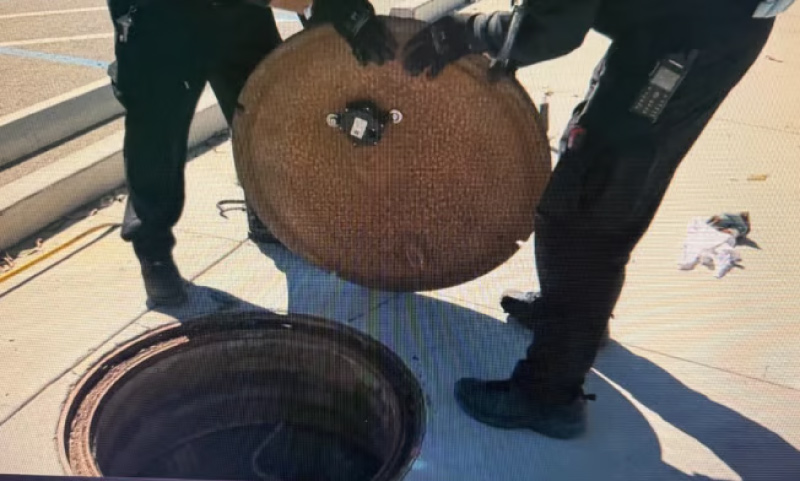
NFL stadium manhole sensors are becoming a key tool for improving safety across large venues. Stadium operators noticed that some fans were trying to slip inside by lifting heavy manhole covers. To stop this, the facility partnered with Sensor Works to install smart devices under the covers and network boxes. These sensors detect even slight movement, and they alert security teams through a wireless network. They also track temperature, humidity, and depth to spot flooding or objects in the way.
Expanding Coverage Across Stadium Grounds
The first group of sensors went in earlier this year, and the system will grow to more than 400 units across a three‑mile service area. Andy Do, president of Embedded Works and its IoT division Sensor Works, said the goal is to tighten controls and monitor any intrusion that could signal a serious threat.
He noted that the stadium plans to add more IoT devices as the network expands. Sensor Works used LoRaWAN on a 900 MHz frequency, and the backhaul runs on fixed wireless access from Verizon Wireless. Tektelic supplied the gateways. With major global events coming to the region in 2026 and 2028, the stadium wanted a future‑ready approach that scales easily.
Why Thieves Can’t Outsmart the System
Some people wonder if intruders could lift the covers slowly or remove the sensors. Do explained that the devices measure precise x, y, and z motion, so any attempt triggers an alert. Each sensor sits inside a rugged box fixed tightly under the metal cover, which makes prying it loose without detection very unlikely.
A Growing Market for Stadium IoT
Do described Sensor Works as a general contractor for IoT, offering more than 800 sensor types. The company stocks devices for temperature, humidity, water levels, leaks, smoke, fire, and power monitoring. He said the demand for stadium sensors is huge because venues want to track everything from restroom supplies to foot traffic and activity at food areas.
Many industries still overlook the value of sensors, including data centers. Do believes in “sensorizing” and “IoT‑izing” every space to understand how buildings behave. Embedded Works, now 20 years old, can prepare and test sensors within a week.
He added that the hardest part is convincing organizations that they need sensors. When a major event depends on stable fiber feeds, any tampering can cause major disruption. While he did not share the total cost of the stadium project, he said it was lower than expected because it required no trenching or cable pulling. The real value comes from knowing what the building is doing and letting it communicate in real time.
As more venues adopt IoT, stadiums will continue exploring new ways to monitor activity and stay ahead of emerging risks.